
Understanding GWP in respiratory care
The biggest climate difference between inhalers lies in the technology they use, particularly the propellant gases in classic pressurised metered-dose inhalers (pMDIs). These propellants are gases that help spray the medicine into the lungs, but they are also potent greenhouse gases that trap heat in the atmosphere and accelerate global warming. Specifically, pMDIs use hydrofluoroalkanes (HFAs), such as HFA-134a and HFA-227ea. These chemicals have an extremely high global warming potential (GWP). As they remain in the atmosphere for decades, it means their climate impact builds up significantly over time. For comparison, carbon dioxide (CO₂) is assigned a GWP of 1, the propellant HFA-227ea has a GWP over 100 years of 3220, meaning it contributes over 3220 times more to warming than CO₂ over 100 years. HFA-134a isn’t far behind, with a GWP of 1430 over 100 years.
Although each pMDI dose contains only a small amount of propellant (around 50–75 mg per puff), the average inhaler still generates between 9 and 22.5 kg of CO₂e over its lifetime. With more than 800 million pMDIs used globally each year, this adds up to a significant overall climate footprint. What’s more, the majority of these emissions don’t occur during production, but at the moment of use when the propellant is released into the atmosphere. That’s why these emissions are classified as scope 1 in hospital carbon accounting. Strikingly, in the 2024 sustainability analysis of the hospital group, pMDIs represented only 7,5% of all prescribed inhalers, yet they were responsible for over 60% of associated emissions of inhalers. The true figure is likely even higher, as prescriptions filled outside the hospital (e.g. in community pharmacies) weren’t included in the calculation.
What can be done?
There are several ways to reduce the climate impact of inhalers. Not all pMDIs have the same carbon footprint, some use propellants with a lower GWP. When clinically appropriate, choosing these lower-impact options can already lead to substantial emission reductions. Manufacturers such as AstraZeneca, Chiesi, and GSK are now gradually transitioning to next-generation pMDIs using HFA-152a (GWP = 124), replacing more harmful gases like HFA-227a and -134a. In Belgium, the national medicines formulary bcfi.be clearly lists the type of propellant used in each product, an important tool for sustainable prescribing.
An even greater reduction in emissions is possible by switching to propellant-free alternatives. Dry powder inhalers (DPIs) and soft mist inhalers (SMIs) are clinically equivalent to pMDIs in many cases but come with a much carbon footprint up to 90% lower. For example, the CO₂e emissions of a typical DPI range from just 0.5 to 2.5 kg per device. Reusable SMIs, such as Respimat®, emit as little as 0.23 kg CO₂e over six months of use. Table 1 summarises which inhaler devices have the lowest climate impact and can therefore be prioritised when clinically appropriate.
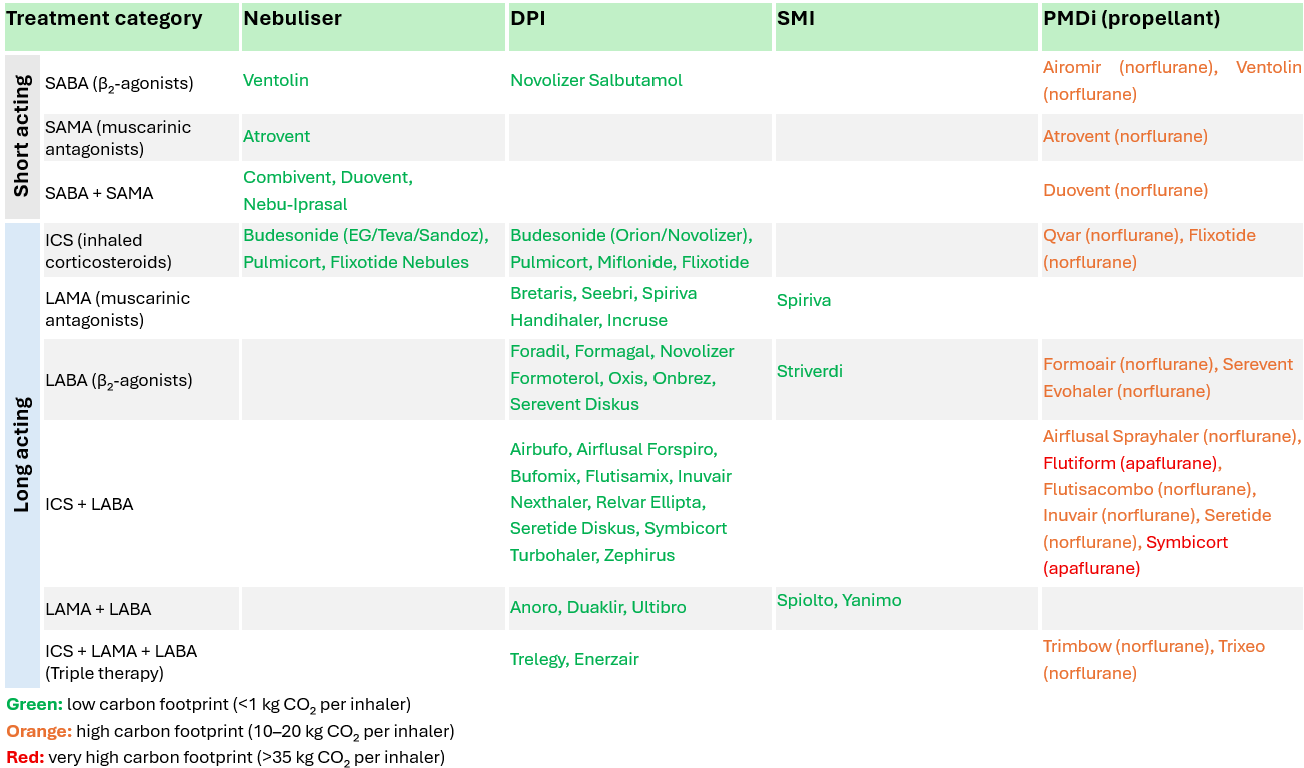
Table 1: Overview of the types of inhalation therapy and their carbon footprint. (Saerens, 2022)
In addition to switching inhaler types, reducing unnecessary prescribing is another important strategy for lowering emissions. Some patients continue using inhaled medication long after their clinical need has changed, leading to avoidable environmental impact and wasted resources. Regularly reviewing inhalation therapy and tailoring prescriptions to current patient needs can help prevent overtreatment. Climate-conscious prescribing isn’t just a sustainability issue; it’s a matter of good clinical practice.
In the UK, the NHS has been a frontrunner in addressing the environmental impact of inhalers. As part of its Net Zero strategy, NHS England has set a clear goal to reduce emissions from inhaler prescribing, which currently accounts for around 3% of its total carbon footprint. Clinical guidelines encourage the use of low-carbon inhalers, particularly for new diagnoses and stable patients. Regional formularies and tools like the Respiratory Carbon Impact Dashboard provide prescribers with data on the environmental footprint of different inhaler types. These initiatives show how climate goals can be aligned with respiratory care, without compromising patient outcomes.
Making the switch
Hospitals can play a central role in the
transition toward more sustainable inhaler use. By systematically prioritising
DPIs or climate-friendlier pMDIs, and embedding this preference into the
hospital formulary, they can significantly reduce scope 1 emissions from
medicines. However, making this shift successfully requires several key steps.
First, requesting Life Cycle Assessment (LCA) data from suppliers enables
procurement teams to explicitly take environmental impact into account when
making purchasing decisions. Once this data is available, the next step is to
secure clinical buy-in. Engaging pneumologists, paediatricians, emergency physicians
and the hospital’s pharmaceutical committee is essential to ensure that
environmental and clinical priorities are aligned.In parallel, educating patients on long-term inhaler therapy is vital. Clear communication about why a product switch is being made, combined with reassurance about the safety and effectiveness of the alternative, helps ensure acceptance and proper use. Patient education is also essential to avoid unnecessary emissions and waste. Many users continue to use pMDIs beyond their dose limit or apply incorrect technique, which leads to higher emissions with reduced therapeutic effect. Ensuring correct inhaler use maximises both clinical benefit and environmental performance. In addition, proper collection and recycling of used inhalers is crucial, as many devices still contain residual propellant gas that would otherwise be released during standard waste disposal.
So in short, clinicians can already make a meaningful difference by choosing climate-smart inhaler care:
1. Choose low-carbon inhalers first. DPIs and SMIs deliver the same clinical benefits as pMDIs, but with a fraction of the emissions.
2. Select cleaner pMDIs when needed. Prefer new HFA-152a options and avoid high-GWP HFA-227ea such as Symbicort where alternatives exist.
3. Deprescribe when possible. Regularly reassess therapy to prevent overtreatment and unnecessary emissions.
4. Optimise inhaler technique. Better technique means fewer wasted doses, better control, and reduced climate impact.
5. Ensure proper disposal. Used pMDIs still contain potent propellants that must be captured, not released into the atmosphere.
At NZHI, we help hospitals turn sustainability goals into measurable impact. Whether you're launching a targeted intervention on inhaler emissions, integrating low-impact inhalers into your formularies, or developing a broader climate-conscious prescribing policy, NZHI supports you every step of the way. With our science-based tools we can equip your teams with the insights they need to act decisively. We work hands-on with pharmacists, procurement teams and clinicians to ensure your efforts are both clinically sound and climate smart. Let us help you move from intent to impact.
References:
1. Jeswani et al., 2019, Life cycle environmental impacts of inhalers
2. anigone et al., 2020, Environmental impact of inhalers for respiratory diseases: decreasing the carbon footprint while preserving patient-tailored treatment
3. Saerens, 2022, De ecologische voetafdruk van inhalatietherapie - Hoe groot is de impact en hoe kan het beter?
4. Sosnowski et al., 2023, Evaluation and Mitigation of Carbon Footprint of Medical Inhalers