
Behind every successful surgery lies a process that patients never see: the meticulous work of the Central Sterile Services Department (CSSD). Here, surgical instruments and medical devices are cleaned, sterilised, packed, and returned to ensure patient safety. While its role in infection prevention is universally acknowledged, its potential role in sustainability might be overlooked.
Hospitals are among the most resource-intensive public institutions (if you’re a frequent reader of NZHI-blogs, we guess you know the numbers by now). Much of their impact comes from three areas: energy, water use, and medical goods. The CSSD is a hotspot for all three. Autoclaves and washer-disinfectors consume large amounts of water and electricity, while packaging materials add significantly to hospital waste streams. Yet the CSSD is not only part of the problem. When hospitals move away from disposables and embrace reusables, the CSSD becomes a critical enabler. In this blog, you’ll find out how to make the CSSD more sustainable and read how a stronger CSSD can drive the hospital-wide shift toward safe and scalable reuse.
Inside the CSSD
Sterilisation is resource-intensive by design. Every cycle of cleaning, disinfection and packaging consumes water, energy and materials. Yet within this workflow lie many opportunities to cut waste and cost without compromising quality. By improving water and energy practice, optimising packaging, and adopting smart technologies, CSSDs can shift from heavy consumers to leaders of efficiency.
Water use is one of the biggest challenges. Washer-disinfectors and autoclaves rely on repeated rinses and steam, making the CSSD one of the hospital’s larger water users Daily practice matters: running machines at full capacity, using eco-modes where validated, and fixing small leaks promptly all prevent unnecessary consumption. But shifting towards more modern high-efficiency units (<150 liters per cycle) can dramatically reduce water consumption compared with older machines (400–600 liters per cycle). Bigger gains come from system-level design. At the Affiliated Hospital of Zunyi Medical University (China), the CSSD installed a parallel water-treatment set-up that recycles both reverse-osmosis “concentrate” and hot/soft cooling water; roughly 10 m³ of concentrate and 30 m³ of hot/soft water are reused each day, about 40,000 liters daily, while maintaining required water quality for reprocessing.
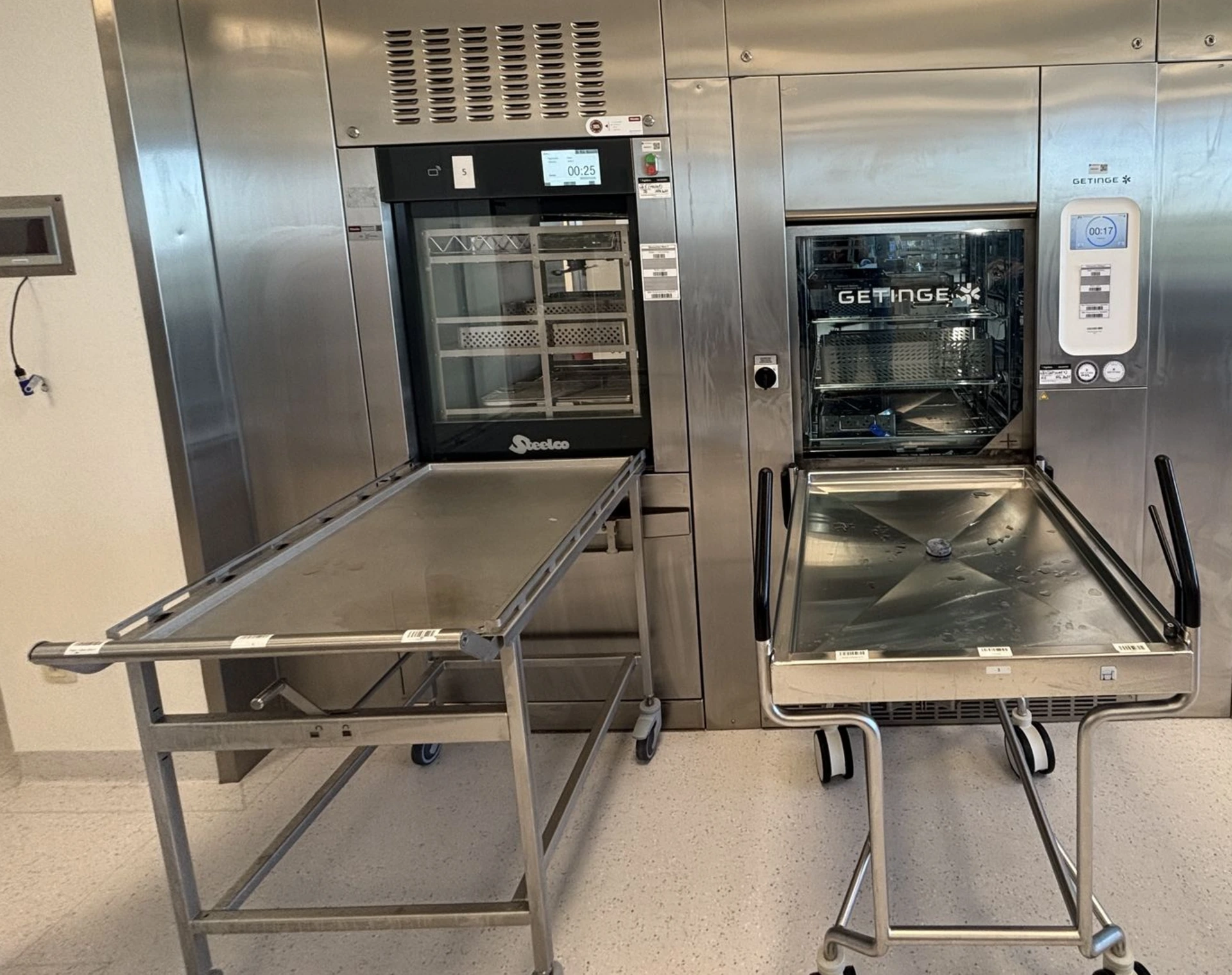
Energy use follows a similar pattern: technology helps, but operations decide the outcome. Manufacturers such as Belimed, Steelco (Miele group) and Smeg offer heat-recovery features that reclaim warmth from exhaust air or cooling circuits to preheat incoming water. Documented savings in the 20% range per cycle for energy/media with Belimed’s heat-recovery and “Dynamic Filling,” and ~19% energy / 33% water reductions in a Smeg thermodisinfector example. Steelco also reports heat-exchanger designs that cut heating energy and up to 50% of cooling-water use per cycle.
Operationally, avoiding idle losses is powerful. A year-long audit of a hospital steam steriliser found standby accounted for ~40% of electricity and ~21% of water consumed by that unit; implementing an “off-when-idle” strategy reduced electricity ~26% and water ~13% with meaningful cost and CO₂ benefits. In short: leaving units hot “just in case” is costly. “Quick-start” fast-cycle designs and auto-idle scheduling make powering down between runs practical without sacrificing responsiveness, and some vendors claim notable reductions when these features are used (e.g., Steelco’s fast-cycle and recovery packages). Reports show that these combined features can cut overall energy consumption by 30–50%, offering hospitals a straightforward route to greener, more resilient operations.
Packaging is a third area where changes are tangible. The familiar blue wrap used for instrument trays cannot be recycled once opened and contributes materially to OR waste. MetroWest Medical Center (MA, USA) invested $75,000 in rigid containers to cover ~66% of sets and, in the first year, avoided 2,5 tonnes of blue-wrap waste and saved around $30,000 in wrap purchasing and disposal, nearly a 40% first-year payback. Over time, such shifts reduce recurring costs and waste. Complementary life-cycle assessment work at Mayo Clinic found reusable containers have a lower overall environmental impact than disposable blue wrap across a multi-year horizon.
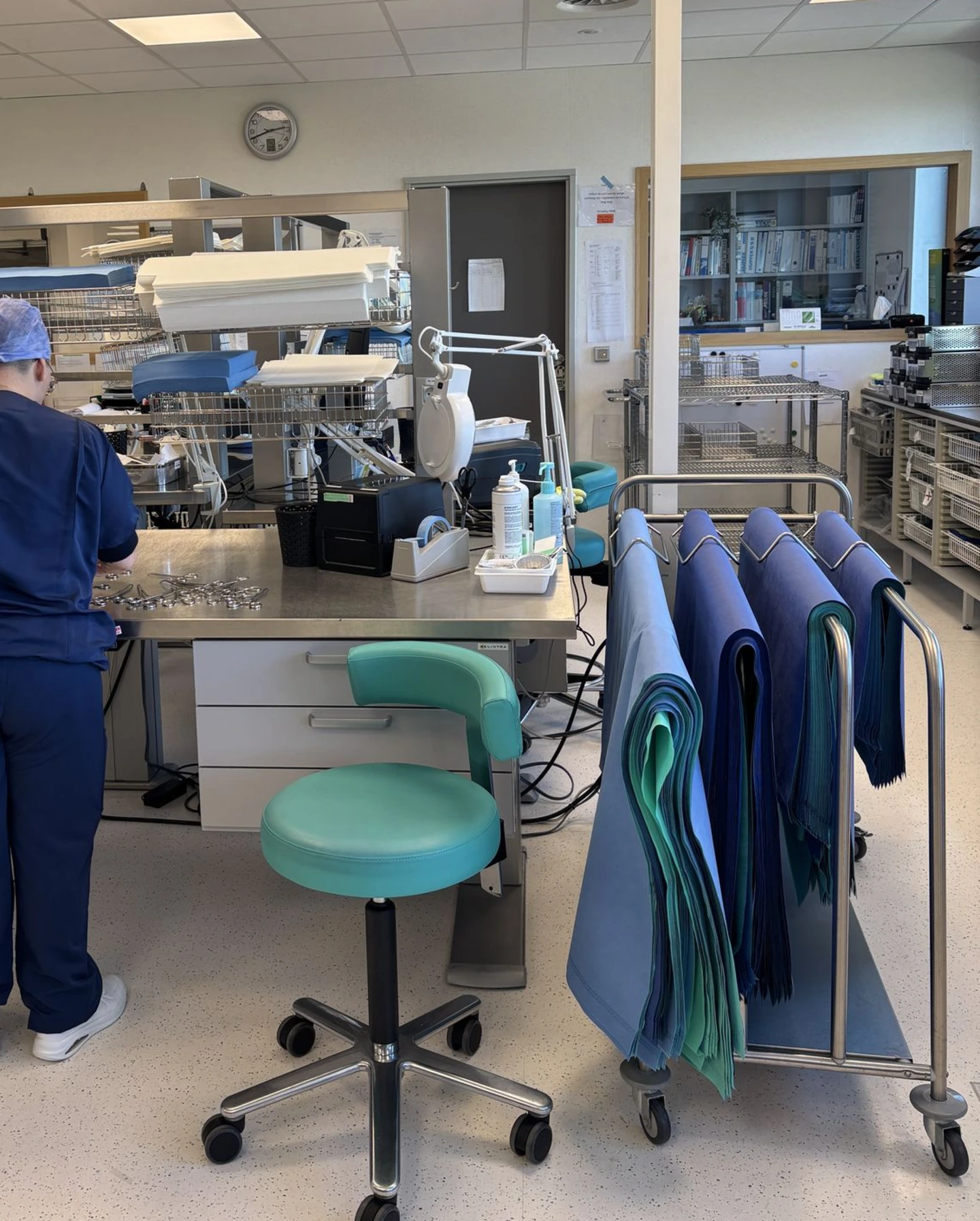
Digitalisation and automation are reshaping day-to-day work. Cir.Log®, an AI-enabled camera developed with Fraunhofer IPK and piloted at Charité hospital (Berlin), recognises instruments without barcodes and documents the entire packing process. By preventing reprocessing caused by packing errors, this system is estimated to cut the CSSD’s footprint by around 726 kg CO₂-eq per year. Automation also extends to packaging. Another compelling innovation is the R‑APPIT (Steelco) automated packaging robot. R-APPIT uses AI-vision to size and wrap trays and can reduce wrapping-material use by up to 28% and take over up to ~90% of packing work, improving consistency and reducing manual strain. Beyond packaging, platforms like Lynqo, an Antwerp-based startup, offer instrument-driven intelligence by monitoring surgical instrument activity. This provides real-time insights into surgical progress, ensures set completeness, and enables data-driven optimization of instrument sets, further enhancing efficiency and preventing errors in the CSSD and operating room. Crucially, by reducing the reliance on manual labour, automation and robotisation are set to lower the overall cost of sterilisation. This price reduction strengthens the business case for shifting from single-use items to reusable alternatives, making circularity a more financially viable and scalable strategy for the entire hospital.
Taken together, these measures form a practical pathway: combine validated equipment features with disciplined operations, system-level water reuse where feasible, smarter packaging choices (rigid containers where appropriate), and targeted digital tools to prevent errors. The result is a CSSD that safeguards patients while using less water, less energy and fewer materials and one that helps the whole hospital move confidently toward reuse.
Beyond the CSSD
The impact of a strong CSSD reaches well beyond its own walls. Its capacity, connections, and procurement influence shape whether hospitals can move away from disposable culture and embrace reuse.
A strong CSSD does not operate in isolation. Its ability to drive sustainability depends on being fully integrated into the hospital’s decision-making. Procurement choices have long-term consequences for efficiency, safety, and resource use. Involving CSSD staff in these decisions about sterilisation units, packaging systems, or surgical sets ensures that the practical realities of reprocessing are taken into account alongside clinical priorities. For surgical sets, this collaboration is especially important: surgeons define what they need in the operating theatre, while CSSD professionals contribute knowledge about how those sets can be standardised, sterilised, and packed most efficiently. When procurement brings both perspectives together, hospitals avoid technologies or set configurations that are unnecessarily costly in terms of water, energy, and staff workload.
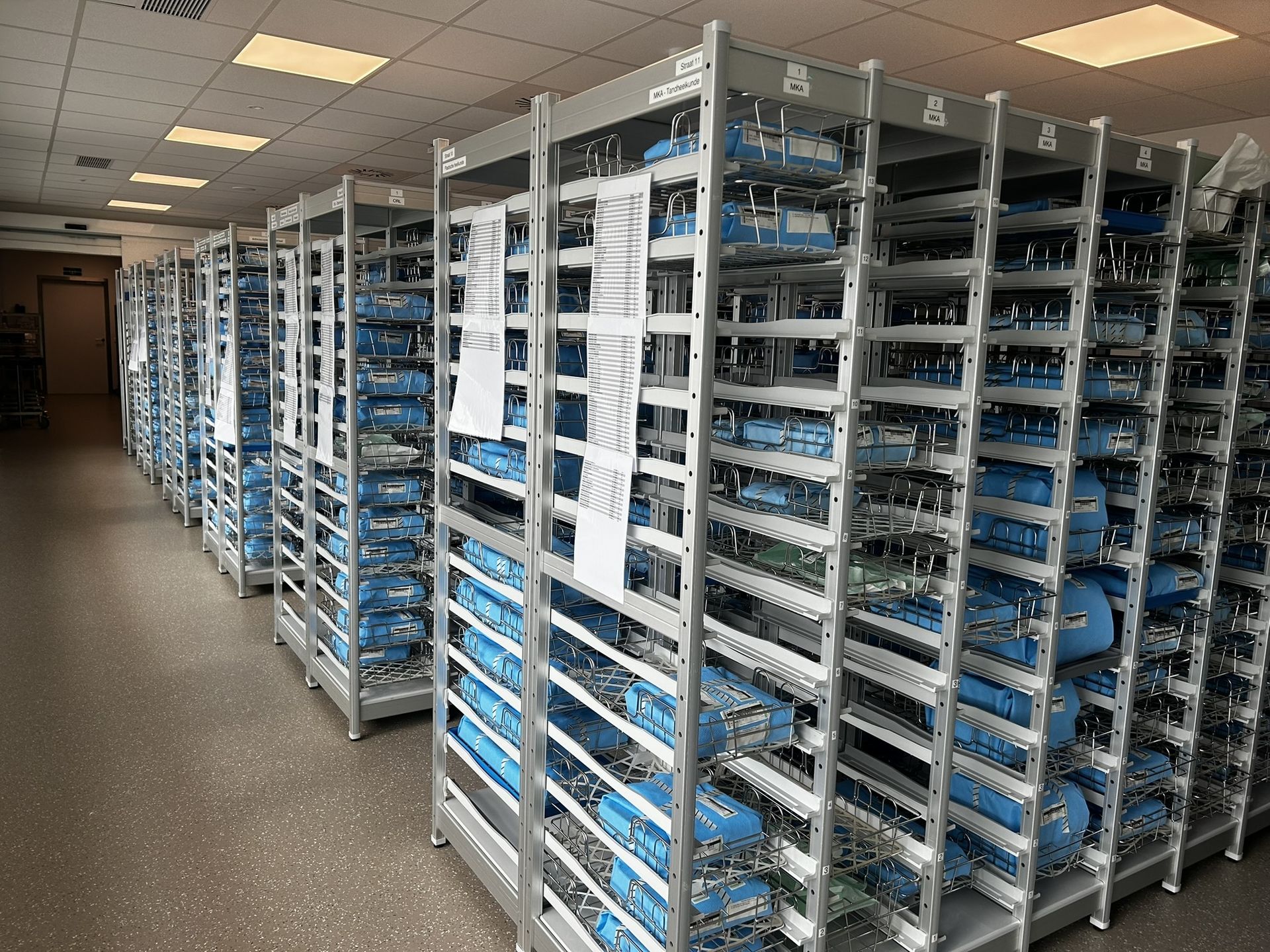
Collaboration across hospitals can be a powerful lever for sustainability. By pooling resources, CSSD hubs make it possible to invest in high-efficiency washers, robotics, and digital tracking systems that would be unaffordable for individual hospitals. A shared model also reduces the need for every hospital to operate its own under-utilised equipment, lowering overall energy and water use. Operating closer to full capacity allows washers and autoclaves to run more efficiently, while concentrating investment in modern, resource-saving technologies instead of duplicating outdated models across sites. However, a comprehensive Life Cycle Assessment is needed to weigh the benefits of reduced on-site utility consumption (water, energy, and chemicals) against the CO₂ emissions from the specialized logistics required to transport sterile sets. While centralisation carries risks if a hub goes offline, the efficiency and sustainability gains from fewer, better facilities could still make shared CSSDs a compelling financial and environmental solution, provided the transport logistics are carefully managed.
Collaboration with suppliers is an essential part of making CSSD operations more sustainable. Surgical loan sets are still often delivered to hospitals without sterilisation certificates, obliging CSSDs to reprocess them before use. Often this reprocessing is redundant, yet it consumes staff time, energy, water, and packaging while adding to costs and waste streams. Clearer agreements with manufacturers can change this dynamic. By requiring suppliers to provide valid sterilisation certificates upon delivery, hospitals ensure that equipment arrives safe and ready for use. This not only reduces the burden on sterilisation staff but also avoids unnecessary environmental impacts from avoidable processing cycles. Embedding such requirements into procurement contracts directly makes sterile supply more efficient, reliable, cost-effective, and climate smart.
CSSD as a driver of reuse
The Central Sterile Services Department is more than a hidden engine of patient safety. Its most strategic role lies in enabling reuse. Reusable gowns, drapes, containers, and optimised surgical sets all depend on reliable sterilisation. Without a strong and efficient CSSD, hospitals cannot safely scale back disposables or build circular systems. By investing in digitalisation, automation, smarter practices and more efficient equipment, hospitals can unlock a triple benefit: a smaller environmental footprint, lower costs, and greater resilience all while maintaining the highest standards of patient safety.
At NZHI, we help hospitals turn sustainability goals into measurable impact. Whether you are reducing the environmental footprint of your CSSD, seeking more sustainable sterile packaging solutions, or embedding sustainability into procurement, NZHI can support you at every step. Our science-based tools and hands-on expertise ensure that well-intentioned efforts become effective, cost-efficient, and aligned with broader sustainability goals. Let us help you move from intent to impact.
We thank Frédéric Van Geuns (Lynqo) for his expert review and valuable contribution to this article.